$1.1 Million NASA Grant Supports Community-Based Study into the Health and Environmental Impacts of the Salton Sea Crisis
Salton Sea, CA — January 29, 2025 — A new research paper underscores the alarming environmental and public health risks posed by the Salton Sea’s ongoing environmental degradation, particularly the high levels of hydrogen sulfide (H₂S) emissions. The study, supported by Alianza Coachella Valley and made possible by a $1.1 million grant from NASA titled ‘Earth Observations for Resilient Salton Sea Communities’ and a grant from Burroughs Wellcome Fund, reveals significant gaps in air quality monitoring and highlights the urgent need for comprehensive solutions to mitigate the risks faced by nearby communities. Researchers have posted a preprint of this research paper on Earth ArXiv that is currently undergoing peer review at GeoHealth.
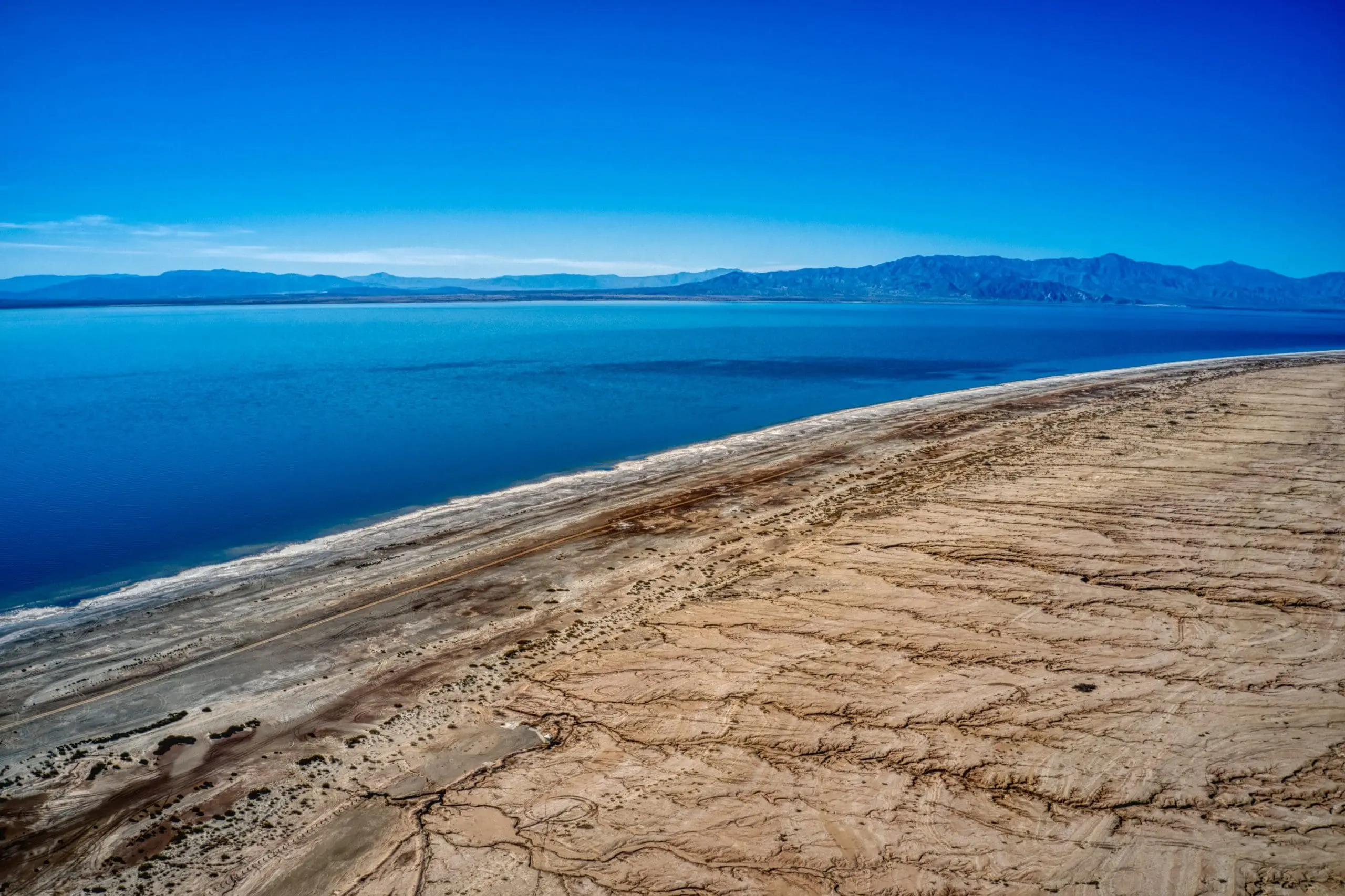
For over two decades, the Salton Sea has been rapidly shrinking due to declining water levels, dropping by approximately 0.2 meters per year. This environmental crisis has exposed large sections of the lakebed, creating hazardous dust that worsens the region’s already poor air quality. Simultaneously, agricultural runoff laden with fertilizers and pesticides has intensified the conditions that lead to the production of hydrogen sulfide — a gas that, even at low doses with chronic exposure, contributes to serious health problems.
Key Findings of the Study:
- Hydrogen Sulfide (H₂S) Concentrations: In areas north of the Salton Sea, including the Torres Martinez Reservation, concentrations of H₂S frequently exceed California’s air quality standard of 30 parts per billion (ppb), particularly during early mornings and afternoons in the summertime.
- Increased Risk to Vulnerable Communities: The study identifies that the most significant air quality violations occur in nearby low-income and predominantly Latino and Indigenous communities, where residents could be exposed to elevated levels of hydrogen sulfide, which is known to cause headaches, respiratory issues, and fatigue. The lack of sufficient monitoring equipment in Imperial County adds to the problem, with crucial air quality data potentially being underreported.
- Environmental Drivers: Hydrogen sulfide is produced in the Salton Sea and surrounding low-oxygen sediments. Production and emission of hydrogen sulfide is a result of the poor water quality at the Salton Sea, including the high levels of nutrient pollution and high salinity.
The Urgency of More Monitoring and Action: The Salton Sea is a significant, yet largely underreported, source of hydrogen sulfide emissions. The current monitoring network is insufficient to capture the full scope of the problem, particularly in southern regions of the Sea and in the communities closest to the shoreline. With the shrinking of the lake and increased exposure of mudflats and shallow shorelines as well as increased sulfate concentrations, the potential for even higher levels of outgassing is concerning, particularly as California’s water conservation efforts continue to evolve.
Health and Community Impacts: The Salton Sea is situated in one of California’s most economically disadvantaged regions, and the public health risks tied to toxic exposure are disproportionately affecting people of color and low-income families. Long-term exposure to hydrogen sulfide can contribute to a range of health problems, including chronic respiratory issues, headaches, and overall fatigue, among others the study urges policymakers to increase monitoring capabilities, particularly in vulnerable areas, and to take immediate action to mitigate H2S emissions through remediation to protect public health.
Solutions for the Future: The research not only underscores the severity of the air quality issues but also calls for community-led solutions that combine natural and built infrastructure to address both the environmental and social challenges facing the region. Some community proposals include creating multi-benefit projects such as:
- Dust suppression through the development of trails and public spaces, which can also encourage physical activity and provide access to transportation options.
- Wetland restoration efforts to treat agricultural runoff, reduce pollutants, and enhance the region’s natural habitat, which could benefit both wildlife and local communities.
“The findings of this study present a clear call to action,” said Diego Centeno, lead author of the study, who conducted the research as a research assistant at Brown University and is now a PhD student at University of California Los Angeles. “Not only does the Salton Sea crisis require more robust air quality monitoring and intervention, but we must also explore sustainable, community-driven solutions to ensure the long-term health of both the environment and the people living in this region.”
“Salton Sea communities can only thrive when we address poor health outcomes,” said Silvia Paz, executive director of Alianza Coachella Valley. “Our Campaign for Thriving Salton Sea Communities will continue to produce publicly available data and inform solutions to the challenges of the receding Salton Sea and improve health outcomes for residents.”
About the Research: This important study, funded by NASA, titled ‘Earth Observations for Resilient Salton Sea Communities’ is a partnership between Alianza Coachella Valley, Brown University, University of California Los Angeles, and Loma Linda University. This work is rooted in a community science approach and aims to better understand the environmental and health impacts of the Salton Sea’s changing conditions. The study relied on in-situ monitors and satellite data to assess the presence and concentration of hydrogen sulfide, offering crucial insights into the air quality and its implications for local populations. Alianza Coachella Valley, with its partners, is actively looking to use the research to inform solutions and conducted multiple workshops in the past year with local communities with future workshops planned in the coming months and years.
“The community based approach is essential to the success of the research. Our research aims to inform action and that action will only be impactful and equitable if impacted communities are front and center in all decision-making,” said Mara Freilich, assistant professor at Brown University, corresponding author on the study, and PI of the NASA grant.
The research emphasizes the importance of collaboration between scientific institutions, local communities, and government agencies to address the ongoing challenges at the Salton Sea. By improving monitoring and creating actionable solutions, the study aims to help guide future policy decisions that can mitigate health risks and environmental damage.
Media Contact: Braxton Kellogg, braxton@alianzacv.org