This past month, Alianza Coachella Valley’s Campaign for Thriving Salton Sea Communities and its partners hosted the second round of community workshops focused on the Salton Sea’s odor, called “What’s That Smell? Our Experiences Living by the Salton Sea.” These workshops are part of the ongoing Community Science (Salton Sea Environmental Timeseries) project, which seeks to better understand the implications and impacts of the Sea’s odor on local communities.
Where We Met
This year’s workshops were held in mid-August at three different locations around the Salton Sea:
- August 20 – Torres Martinez Tribal Hall, in partnership with the Torres Martinez Desert Cahuilla Indians
- August 22 – Mecca Boys and Girls Club
- August 23 – Imperial Valley for Equity and Justice office, Calipatria
We were excited to see strong turnout at each gathering, with residents from Mecca, North Shore, Indio, Calipatria, Thermal, Salton City, and other surrounding communities.
What We Covered
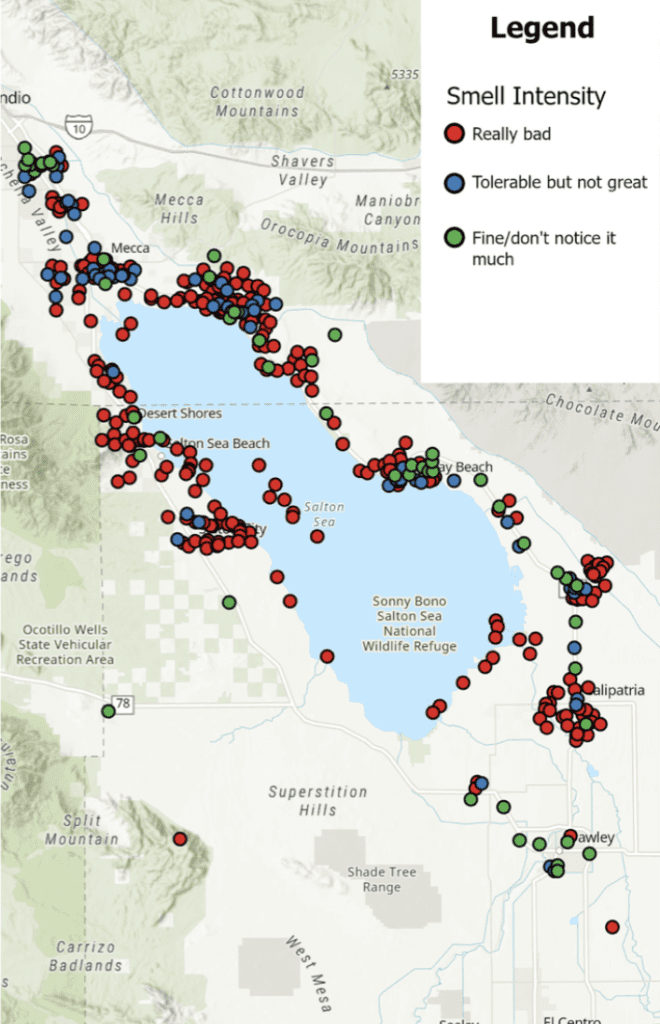
Each workshop provided a space to share updates, reflect on recent wins from the Salton Sea Environmental Timeseries project, and conduct another round of smell mapping – a hands-on way for residents to track where the Salton Sea’s odor is most pungent, tolerable, or unnoticeable.
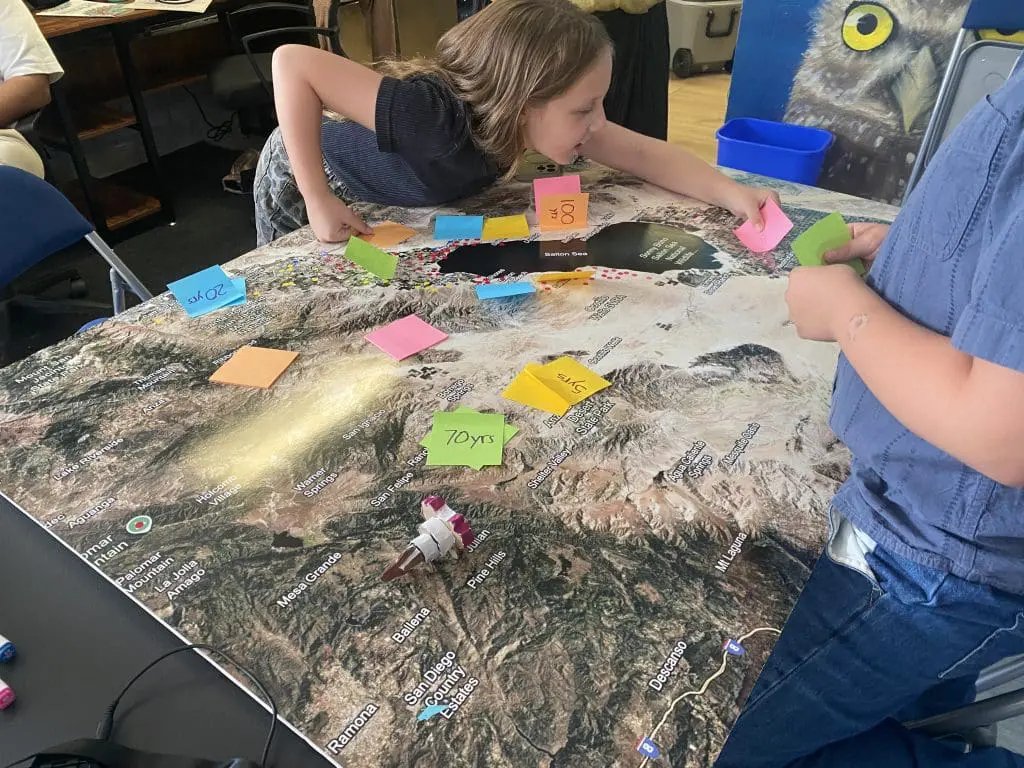
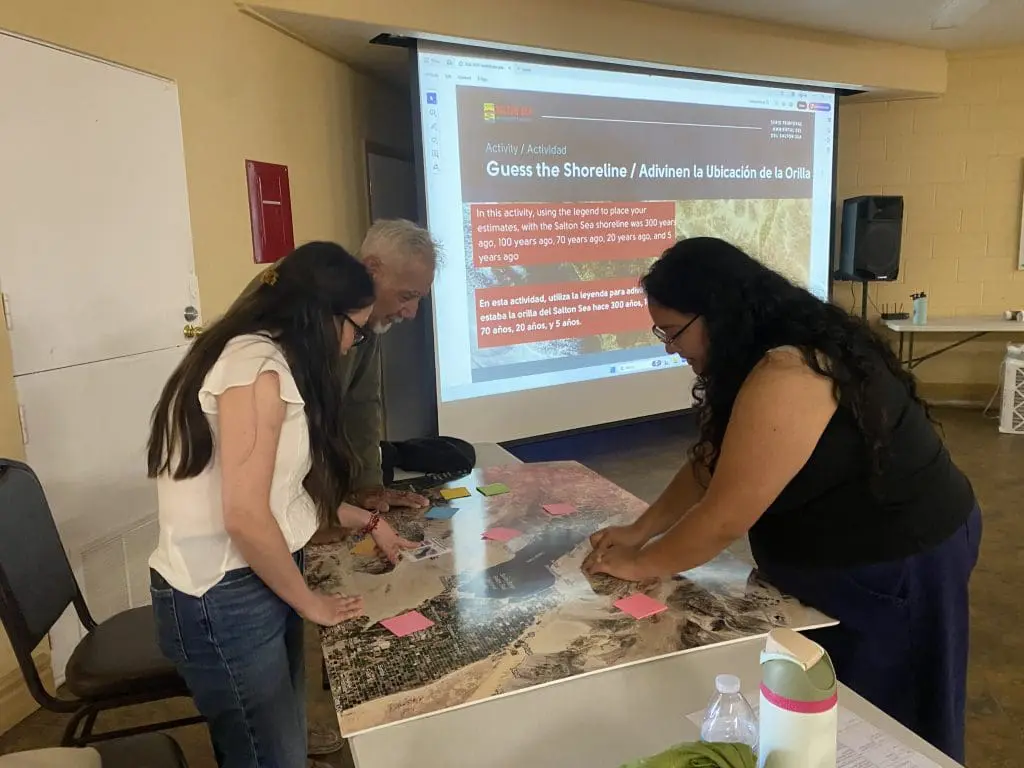
This year, we leaned further into action by introducing new advocacy activities alongside the research updates. Workshops began with “Guess the Shoreline”, an activity where participants marked where they believed the shoreline of the Salton Sea had been 300, 100, 70, 20, and 5 years ago. This prompted reflections on the Sea’s dramatic changes over time and what those shifts mean for the community today.
From there, small-group discussions explored different strategies for community action:
- Political Advocacy – Opportunities to influence policy around the Salton Sea.
- Immediate Health Protections – DIY tools such as Corsi-Rosenthal air filters, along with assistance applying to the South Coast Air Quality Management District’s Residential Air Filtration Program.
- Storytelling & Public Narrative – How to reshape the way the Salton Sea is understood and talked about, centering community experiences.
Building on Last Year’s Work
This year’s smell maps build on the data collected during the 2024 Salton Sea Odor Workshops, held at the Torres Martinez Tribal Hall, North Shore Beach and Yacht Club, and Bombay Beach Community Center. This updated map as part of our ongoing effort to document how odor issues shift over time and across communities.
Who Joined Us
In addition to community members, staff from the California Regional Water Quality Control Board attended the workshops in Mecca and Thermal, listening directly to residents’ concerns and experiences. Staff from the South Coast Air Quality Management District also attended the workshop on August 22, facilitating the application process for their Residential Air Filtration Program. Our partners from Loma Linda University (Dr. Ryan Sinclair), Brown University (Dr. Mara Freilich), and UCLA (Dr. Isabella Arzeno-Soltero and Dr. Kaily Heitz) also facilitated parts of the workshop, demonstrating their commitment to turning data into actionable change for the community. Their presence reflects an important step in ensuring that community voices are part of the decision-making process.
Here’s what some of them had to say:
“The key achievement of the workshops is that they allow us to connect with diverse community members and hear their priorities and stories. For me, this is a valuable learning experience; however, we aim to go beyond that. I hope that through these efforts, we can engage more community members in data collection and analysis, as well as in developing solutions, so that the community can take greater stewardship of the environment.” – Dr. Isabella Arzeno-Soltero, UCLA
“Having these touchpoints and collaboration with our communities around the lake is so important. It helps us understand what we need to continue to uplift as we advocate for a better quality of life and why we need to uplift the community when we are in the same spaces as decision-makers.” – Aydee Palomino, Alianza Coachella Valley
“Collaborative workshops provide very important perspective and grounding for our research. It was apparent from the workshops, as in many other spaces, that communities need urgent action on environmental and infrastructure hazards.” – Dr. Mara Freilich, Brown University